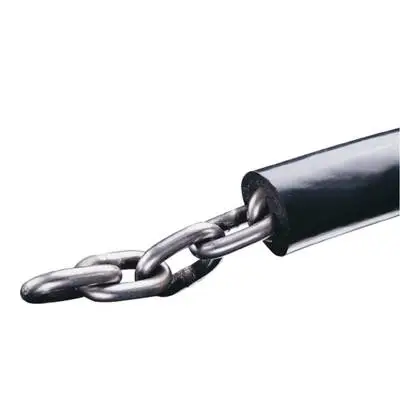
An elevator compensation chain is a critical component used to correct weight imbalances in the car, counterweight and suspension rope/cable system. In tall buildings or deep hoistways, it balances the weight difference between the suspension ropes and the car/counterweight, ensuring trouble-free operation of the system.
Prevents overloading by balancing the weight of the suspension ropes and hoistway cables.
Balances the weight shift that occurs as the elevator travels up or down, so the load on the motor and machine stays constant.
Reduces friction, noise and vibration for more comfortable, quieter operation.
Compensation chains are especially critical in high-rise elevators or those with deep hoistways. The generally accepted practice: compensation systems (rope or chain) should be used when the travel distance exceeds 30 meters.
Over long travel distances, the weight of the suspension ropes and hoistway cables varies, which can cause motor strain, vibration and wear. A compensation chain balances out this difference.
Suitable for both modern VVVF-controlled systems and conventional elevators, a compensation chain provides both ease of maintenance and safety. Proper installation extends the elevator’s service life.
Compensation chains can be manufactured with an inner chain plus outer sheathing (PVC/plastic) or in fully plastic-coated versions. This construction minimizes corrosion, wear and noise.
Reduce noise and friction.
Low maintenance requirements and long service life.
High breaking strength — ideal for heavy-duty and high-rise elevators.
Easy installation, compatibility and reliable operation.
Balanced, stable elevator operation with reduced sway and vibration.
Longer life for the machine, motor and suspension ropes; prevention of overloading and uneven load distribution.
A quiet, comfortable ride, plus passenger satisfaction and safety.
Energy efficiency — with a balanced load, the motor works less hard
The right chain type and weight should be selected based on travel distance and suspension rope/cable weight.
The chain and roller guide systems must be installed correctly and maintained periodically — this is critical for both safety and performance.
Especially in high-speed and high-rise elevators, low-noise models such as plastic-coated chain or lubricated inner chain should be preferred.